
Design Psychology for E-commerce: 7 Principles That Help Shoppers Buy
 By Neelam, Founder · 16 years in e-commerce & fintech UX13 November 20266 min read
In short: Good e-commerce design works with how people decide: fewer, clearer choices; proof from other buyers; no surprise costs; and nothing that makes the shopper think twice. Here are seven principles we use, with the research behind them and where it stops.
1. Fewer, clearer choices (choice overload)
In the famous 2000 "jam study", psychologists Sheena Iyengar and Mark Lepper set up a tasting booth with either 24 or 6 jams. The big display attracted more people, but shoppers who saw the small display were more than six times as likely to buy (strategy+business).
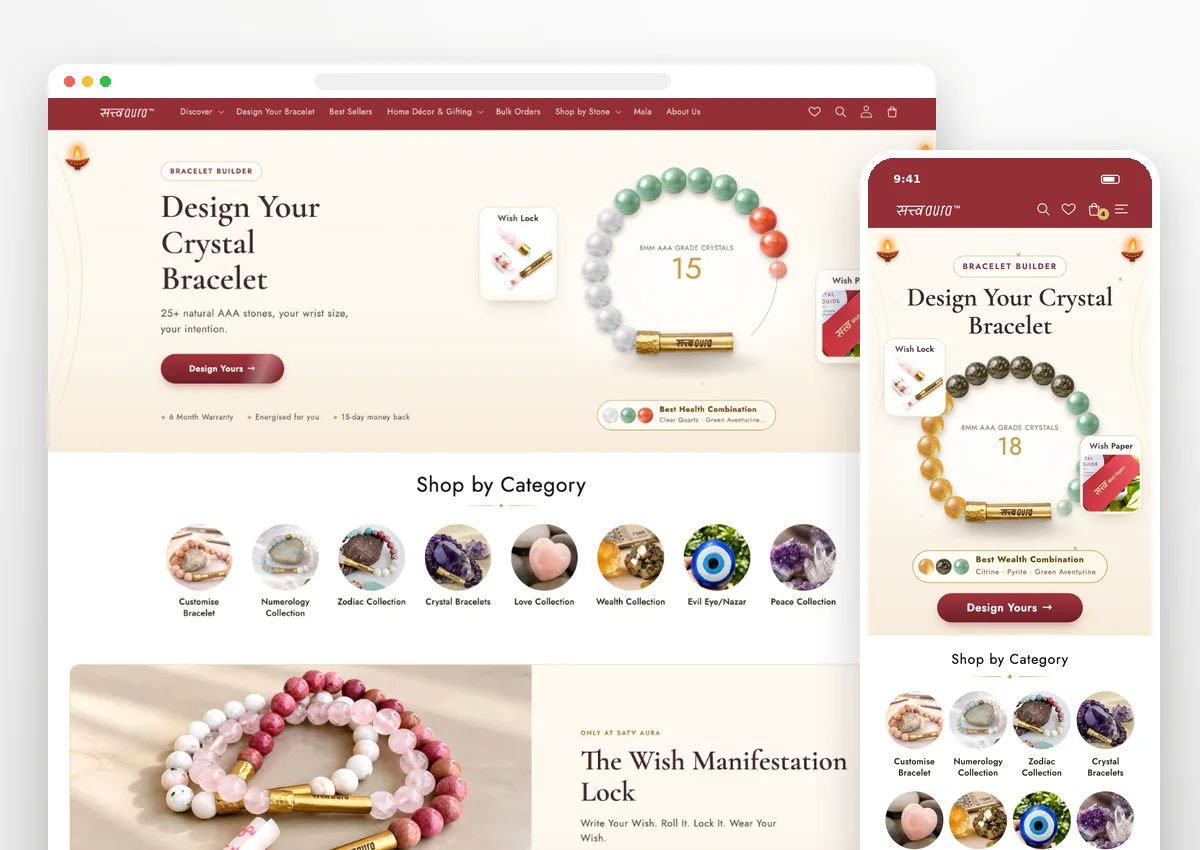
The honest caveat: later meta-analyses found the effect varies a lot by context — it hits first-time buyers and complex products hardest. So the lesson is not "sell less", it is "make choosing easy": good filters, a clear best-seller, and a guided option for people who don't know what they want. That is why we built a birth-date Crystal Expert for Satv Aura instead of showing 100 bracelets at once.
2. Social proof where the doubt is
Social proof is one of Robert Cialdini's six principles of influence: when we are unsure, we copy what others did (Nielsen Norman Group). Reviews work best next to the decision they support — star rating under the title, photo reviews near the gallery, "fits true to size" next to the size picker.
Nielsen Norman Group also warns that social-proof widgets can crowd the page and slow it down, so test them rather than stacking every badge you can find.

3. No surprise costs
Among US shoppers who abandoned a checkout for a reason other than "just browsing", 40% left because shipping, tax or other costs were too high (Baymard Institute, via Red Stag Fulfillment). Show delivery cost and time on the product page and cart, not for the first time at payment.
4. Reduce cognitive load
Every extra field, pop-up and competing button costs attention. Make the next step the most visible thing on the screen: one primary button per view, short forms, and labels written in the customer's words, not your internal product codes.
5. Anchors and honest comparisons
People judge a price relative to the first number they see. Showing a bundle next to single items, or "most popular" on a middle plan, helps shoppers compare. Keep it truthful: fake "was" prices and invented discounts damage trust and can break consumer law.
6. Trust signals before the card form
19% of those abandoners did not trust the site with their card details (Baymard, via Red Stag). Familiar payment logos, a visible returns policy, real contact details and a fast, professional-looking site matter most just before payment.
7. Honest urgency only
"Only 2 left" works because it is information. When it is fake, shoppers notice and stop believing everything else on the page. Use urgency only when stock or deadlines are real.
A quick checklist
| Principle | Check on your store |
|---|---|
| Choice | Filters, a clear best-seller and a guided "help me choose" |
| Proof | Reviews beside the decision they support |
| Cost | Delivery cost and time shown before checkout |
| Load | One primary action per screen |
| Trust | Returns, contact and payment logos near the pay button |
Sources
- Iyengar & Lepper jam study — strategy+business
- Social proof in UX — Nielsen Norman Group
- Cart abandonment reasons (Baymard data) — Red Stag Fulfillment
FAQ
What is design psychology in e-commerce?
It is the use of well-studied patterns in how people decide — such as social proof, choice overload and loss aversion — to design store pages that make buying easier and more trustworthy.
Does showing fewer products increase sales?
Not always. Research on choice overload shows mixed results depending on context. The reliable lesson is to make choosing easy with filters, clear best-sellers and guided tools, not simply to remove products.
Is fake urgency a good conversion tactic?
No. Fake countdowns or stock warnings erode trust once shoppers notice them and can breach consumer-protection rules. Use urgency only when it is true.
Want a store designed around how people buy?
We design and build UX-led Shopify and WooCommerce stores for brands worldwide. Custom Shopify coding in 7 days, or a full refund.
Book a call